

Children grow up surrounded by choices. Some are small: which toy to play with, which book to read, whether to share a snack, or whether to keep trying when a puzzle feels difficult. Others become more complex with age: how to respond to pressure, whether to believe a promise, how to handle disappointment, or how to recognize when something exciting may also carry risk.
Children’s books are one of the safest ways to explore these decisions before children face them in real life. A story gives young readers a character, a problem, a temptation, a mistake, and a result. The child can watch the decision unfold without being judged. This is one reason children’s literature remains powerful even in a fast-moving digital culture.
On a site like Margery Cuyler, where the focus is children’s books, reading habits, imagination, learning, humor, and emotional growth, this topic fits naturally. The best stories do more than entertain. They help children practice judgment. They show that choices have consequences, that rewards are not always what they seem, and that patience can be stronger than impulse.
Why Stories Are a Safe Place to Practice Judgment
A child does not learn good judgment from lectures alone. Children often understand an idea more deeply when they see it happen to someone in a story. If a character grabs the biggest slice of cake and then feels lonely because no one wants to play, the child sees more than a rule about sharing. They see the emotional result of selfishness.
This is why children’s literature has such lasting educational value. It allows children to test ideas through imagination. A story can ask: What happens when someone lies? What happens when a promise is broken? What happens when a character waits, listens, apologizes, or asks for help?
The distance of fiction matters. A child may resist being told, “You should be patient.” But the same child may care deeply when a favorite character learns patience after rushing into trouble. Stories soften instruction. They make moral and emotional lessons feel lived rather than imposed.
Reading Aloud Turns Choices Into Conversation
When adults read with children, the story becomes more than printed words. It becomes a conversation. A parent, teacher, or caregiver can pause and ask, “Why do you think she did that?” or “What might happen next?” These questions help children connect the story to their own thinking.
Research-based guidance on reading aloud emphasizes that young children build vocabulary and world knowledge through shared book experiences. But reading aloud also supports judgment. Children hear tone, notice facial expressions, and learn that characters have motives.
The best questions are open rather than testing. Instead of asking only what happened, adults can ask what the child noticed, felt, or wondered. A small conversation after a story can become a child’s first practice in explaining reasons and consequences.
The Difference Between a Reward and a Good Choice
Many children’s stories include rewards: a prize, a celebration, a friendship restored, a problem solved, or a character finally getting what they wanted. But good stories also teach that a reward is not always the same as a good choice.
A character may want something shiny, sweet, fast, or forbidden. At first, the reward looks attractive. Later, the character may discover that the better choice required waiting, sharing, or giving something up. This pattern helps children understand delayed gratification.
In daily life, children encounter reward systems everywhere: stickers, points, games, apps, school prizes, advertisements, and online offers. Stories can help them ask a useful question: “What is this reward asking me to do?” That question becomes more important as children grow older and begin to meet more persuasive digital messages.
How Books Build Early Decision Skills
Good decision-making begins long before children are old enough to make adult choices. It starts with attention, memory, self-control, and the ability to imagine what may happen next. These skills develop slowly and need practice.
Family reading is one practical way to support early literacy, but it can also support everyday reasoning. When a child follows a plot, they hold information in mind. When they predict an ending, they practice cause and effect. When they wait for the next page, they practice patience.
A story has a natural structure: beginning, problem, attempt, result, change. That structure helps children organize experience. They begin to see that actions are connected, emotions change, and problems can be approached in different ways.
Humor Makes Hard Lessons Easier
Children often learn difficult ideas better when humor is involved. A funny book can show mistakes, embarrassment, greed, fear, or stubbornness without making the child feel attacked. Laughter creates safety.
This is why the article on humour in children’s books connects closely with decision-making. Humor invites children to notice the gap between what a character expects and what actually happens. That gap is often where the lesson lives.
A silly character who ignores warnings and ends up covered in mud may teach caution more effectively than a serious warning. A playful story about a boastful animal may help children recognize pride. A funny misunderstanding may teach listening. Humor gives the lesson a gentle landing.
Helping Children Understand Persuasion
Modern children do not only read books. They watch videos, play games, see ads, encounter influencers, and notice digital rewards. Even if adults protect young children carefully, persuasive messages are part of the environment. That makes media awareness important.
The idea of media literacy helps children learn to ask who created a message, what it wants them to believe, and whether it is trying to sell something. Books can support this skill because stories are full of persuasion. Characters make promises, hide motives, exaggerate, bargain, and tempt one another.
A fox may promise safety. A trickster may offer treasure. A friend may pressure another child to break a rule. These scenes give adults a chance to ask: “Was that promise fair?” “Did the character tell the whole truth?” “What did the other character want?” This kind of thinking prepares children for more complex messages later.
Digital Rewards and the Language of “More”
By the time children become teenagers, they may see promotional language in games, apps, social media, shopping platforms, and adult entertainment spaces. Phrases built around bigger rewards, limited-time offers, and bonus claims are designed to attract attention. For example, adults may see online offers such as a 400% deposit bonus, a phrase that sounds exciting because it emphasizes multiplication and reward.
This kind of example should not be directed at children as an invitation. It is useful as a media-literacy example for adults, older teens, educators, and parents discussing how promotional language works. The important question is not whether a phrase sounds generous. The important question is what conditions, risks, limits, and responsibilities sit behind it.
Children’s books can introduce this habit early. When a fairy-tale bargain sounds too good to be true, children can learn to pause. When a character accepts a shiny offer without reading the situation, children see why caution matters. Story logic can become real-world judgment.
A Simple Comparison: Story Rewards vs Digital Rewards
|
Type of Reward |
What Children Can Learn |
Adult Guidance Needed |
|
Story reward |
Good choices may lead to friendship, safety, learning, or repair |
Ask what the character gained and what it cost |
|
Game reward |
Points, badges, or levels can encourage repeated action |
Talk about stopping points and time limits |
|
Advertisement reward |
A product or offer may be presented as more exciting than it is |
Ask who benefits from the message |
|
Social reward |
Likes, praise, or attention can influence behavior |
Discuss self-worth beyond approval |
|
Real-life reward |
Patience and effort can lead to meaningful progress |
Praise process, not only outcome |
This comparison helps separate healthy motivation from pressure. Children do not need to reject all rewards. They need to understand them.
Stories Strengthen Self-Regulation
Self-regulation is the ability to pause, manage feelings, remember a goal, and choose a response. Children are not born with this skill fully formed. They develop it through relationships, practice, routines, and guided experience.
Harvard’s Center on the Developing Child describes executive function as a set of skills that helps people manage information, decisions, and planning. Stories can support these abilities because they ask children to follow sequence, remember details, and understand why characters change direction.
A child listening to a story may notice that the hero cannot solve the problem by grabbing the first answer. They may see a character count to ten, ask for help, wait for morning, or try again. These story moments model self-regulation without turning the book into a lesson sheet.
How Science Stories Teach Curiosity and Evidence
Children’s books are also powerful for teaching how to ask better questions. A child who reads about nature, space, animals, weather, machines, or the human body begins to understand that curiosity can be organized. Wonder can lead to observation. Observation can lead to questions. Questions can lead to evidence.
The Margery Cuyler article on future scientists fits this idea well. Scientific thinking is not only about facts. It is also about learning not to accept the first explanation without looking more closely.
This habit matters beyond science. A child who learns to ask “How do we know?” is better prepared to think about claims, promises, rumors, advertisements, and peer pressure. Books that encourage curiosity help children become less passive receivers of information.
Developmental Stages Matter
Adults sometimes expect children to understand consequences before they are developmentally ready. A preschool child may know a rule but still act impulsively. An older child may understand fairness but struggle when emotions are strong. A teenager may reason well in calm situations but take risks under social pressure.
The CDC’s information on developmental milestones is a useful reminder that children grow across many areas: language, social behavior, movement, learning, and emotional development. Reading choices should respect those stages.
A young child may need books with clear cause and effect. A school-age child may enjoy stories with more complicated motives. A teen may be ready for books that explore moral ambiguity, social pressure, identity, and responsibility. The right book meets the child where they are while gently inviting them forward.
A Small Reading List Strategy for Better Choices
Adults do not need a perfect curriculum to use books this way. A simple mix of story types can help children practice judgment from different angles.
Try keeping these kinds of books in regular rotation:
- A funny book about mistakes and repair
- A story about sharing, fairness, or friendship
- A folktale with a bargain, trickster, or hidden cost
- A nonfiction book that asks children to observe evidence
- A realistic story about school, family, or peer pressure
- A book where the main character must wait or work toward a goal
The variety matters. Children need stories that comfort them, but they also need stories that challenge them. A balanced bookshelf gives them many ways to think about choice.
Dialogic Reading Makes the Lesson Stick
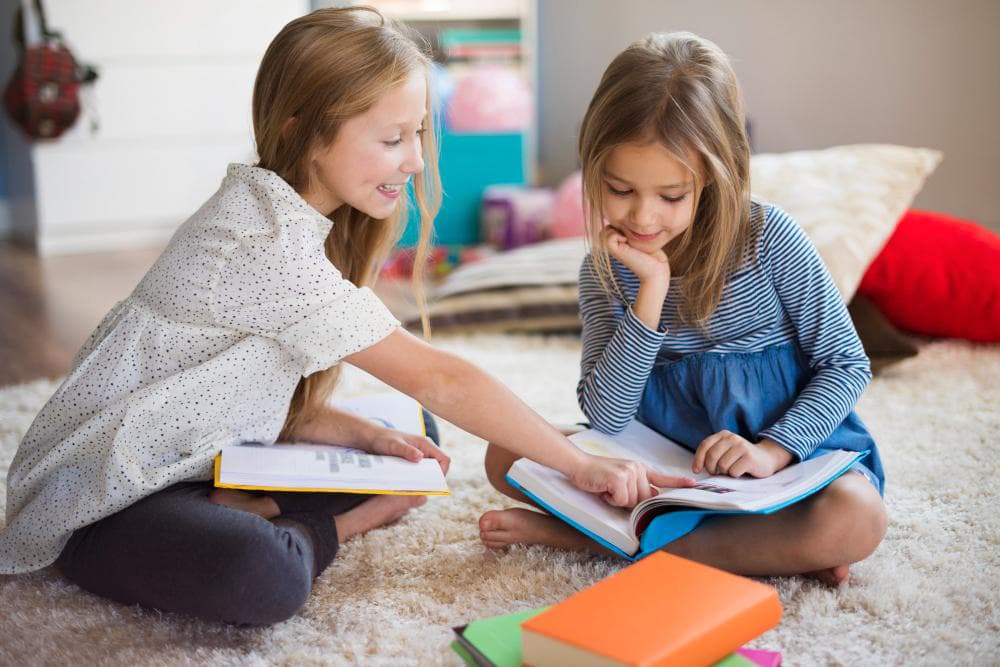
One of the strongest ways to help children think through a story is to let them become part of the reading experience. In dialogic reading, adults and children talk about the book together rather than treating the child as a silent listener.
This approach is especially useful for stories about choices. The adult can ask what the child would do, what the character might be feeling, or what clue was missed. The child can explain, guess, laugh, disagree, and connect the book to their own life.
The goal is not to turn reading into a quiz. The goal is to make thinking visible. When children talk about stories, they practice the language of reasons: because, maybe, if, then, before, after, fair, unfair, safe, risky.
Why Children Need Both Wonder and Warning
Some adults worry that teaching children about persuasion, risk, and consequences will make reading too serious. But a good story does not remove wonder when it teaches judgment. It gives wonder a shape.
Children need magical forests, talking animals, brave heroes, strange inventions, funny disasters, and impossible journeys. They also need characters who learn to pause, think, apologize, refuse, question, and try again. Wonder and warning can live in the same book.
This balance is one reason children’s literature lasts. It respects the child’s imagination while quietly preparing the child for the world. A fairy tale can be enchanting and practical. A funny book can be joyful and wise. A realistic novel can be entertaining and emotionally honest.
Reading as Preparation for a Noisy World
The modern world asks children to process more messages than any previous generation. Some messages inform. Some entertain. Some persuade. Some distract. Some pressure. Children need tools to sort them.
Books help because they slow the mind down. A story asks the child to follow a sequence, listen to another point of view, notice change, and sit with uncertainty. These are not small skills. They are the foundation of thoughtful decision-making.
When children read widely, they meet many kinds of choices before facing them alone. They meet greedy characters, generous characters, impulsive characters, careful characters, frightened characters, and brave characters. They learn that every choice belongs to a larger story.
That may be one of the greatest gifts children’s books offer. They do not only teach children what to think. They help children practice how to think, how to question, how to wait, and how to recognize the difference between a tempting reward and a truly good choice.